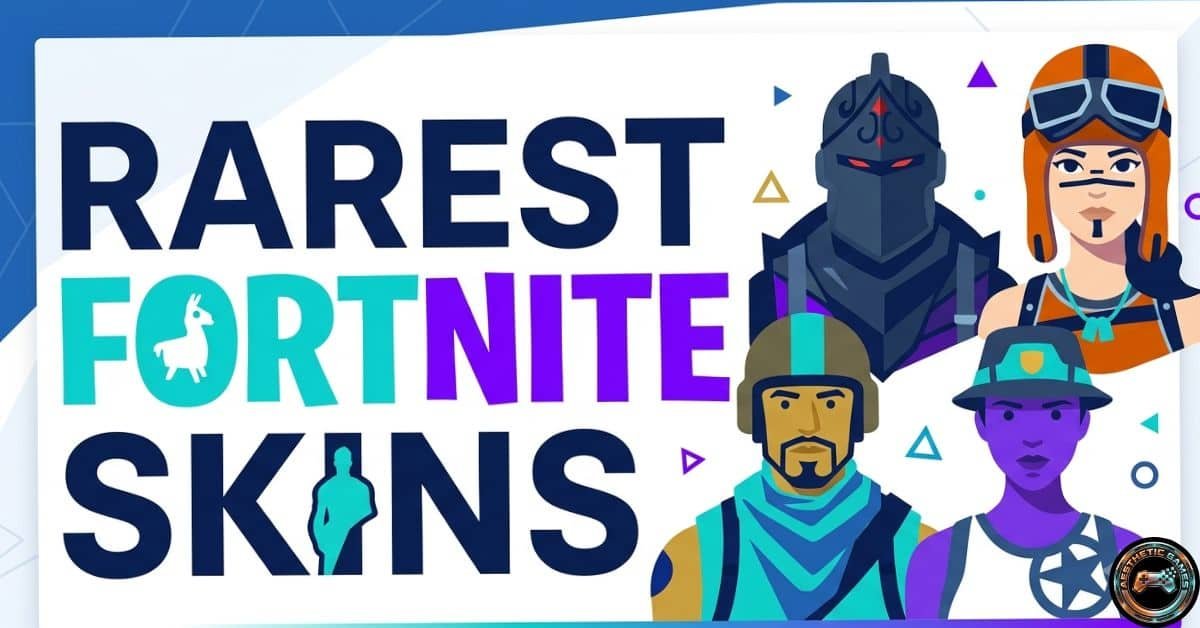
Rarest Fortnite Skins in 2026: The Skins Most Players Will Never Own
Quick Answer
The rarest Fortnite skin right now is generally agreed to be Rogue Agent, the original Starter Pack outfit that has not appeared in the Item Shop since June 2018. Right behind it sit Black Knight, The Reaper, Honor Guard, and Galaxy, all locked away by old Battle Passes or long-dead phone promotions. A handful of former untouchables, including Renegade Raider and Aerial Assault Trooper, have actually returned through the OG Season Shop in 2024 and 2025, so “rare” does not always mean “gone forever.”
Rarity in Fortnite is a moving target. In my experience tracking Item Shop rotations for client sites over the past year, the list changes every few months as Epic experiments with bringing back old cosmetics for anniversaries and nostalgia pushes. What was unobtainable in January can suddenly show up in a Winterfest event by December.
What Actually Makes a Fortnite Skin Rare
People throw the word “rare” around loosely. A skin that just rotated out of the shop last week is not rare. The rarest Fortnite skin status comes down to a handful of specific factors, and understanding them helps you separate genuine collector pieces from skins that will probably show up again next season.
Limited time availability is the simplest cause. Some outfits were only ever sold for a few days, then pulled and never rotated back. Battle Pass exclusives are stricter still. Epic has stated that classic Battle Pass rewards from old seasons remain locked to that season, permanently, no matter how many players ask for them back.
Platform and hardware exclusives are their own category. A skin tied to a phone or console bundle cannot legally return once that promotion contract ends, since it was never really a Fortnite Item Shop product to begin with. Tournament rewards, one-time collaborations, and skins caught up in real-world controversy round out the list. The strongest signal of true rarity is a long, unexplained shop absence with no clear licensing path back.
The Skins Nobody Can Buy Anymore
Rogue Agent, the original Starter Pack ghost
Rogue Agent launched with Fortnite’s very first Starter Pack and hasn’t been seen in the shop since June 2018. It’s the current record holder for longest continuous absence among purchasable skins. It never got a flashy launch moment, which is part of why it flies under the radar compared to louder names like Black Knight.
Black Knight, the Battle Pass benchmark
Black Knight came from the Chapter 1 Season 2 Battle Pass and required hitting Tier 70 before the season ended. Epic has repeatedly confirmed that classic Battle Pass rewards do not return, which makes this outfit the community’s go-to example of permanent exclusivity. Spotting it in a lobby in 2026 is a near guarantee that you’re looking at someone who has played since 2018.
The Reaper, the skin everyone calls John Wick
The Reaper was the Tier 100 reward from the Chapter 1 Season 3 Battle Pass, and its resemblance to John Wick was never officially acknowledged by Epic. It was last available around April 2018. The twist is that Epic later released an actual licensed John Wick skin, which returns to the shop from time to time, while The Reaper itself has never come back once.
Honor Guard, the phone nobody bought
Honor Guard shipped exclusively with the Honor View20 smartphone in early 2019, a device that was never officially sold in North America. It was never listed in the Item Shop at all. Getting it meant importing a phone most players had never heard of and redeeming a code before the promotion lapsed.
Galaxy, the $650 skin
Galaxy required buying a Samsung Galaxy Note 9 or Galaxy Tab S4 in 2018. Only one code was granted per device, and the skin was retired roughly six months later. It was quickly followed by Ikonik for Galaxy S10 buyers, which Samsung officially retired on September 26, 2019, replaced by the Glow skin for newer devices.
Travis Scott and Astro Jack, a rarity tangled in real events
The Travis Scott and Astro Jack outfits launched around the Astronomical concert event in April 2020, one of the most-watched in-game events Epic has staged, and neither has returned since. The absence has nothing to do with skin design and everything to do with real-world circumstances surrounding the artist, including the tragic 2021 Astroworld festival crowd crush. Epic Games founder Tim Sweeney publicly stated in 2023 that Travis Scott is welcome back in Fortnite, so the door isn’t officially closed; it’s just been closed for over five years.
Renegade Raider and Aerial Assault Trooper, the ones that came back
Here’s the twist most rarity lists get wrong. Renegade Raider and Aerial Assault Trooper were absent from Season 1 in December 2017 for a full seven years, and both were widely treated as permanently unobtainable.
Then Epic brought them back through the OG Season Shop in December 2024, tied to an XP grinding system rather than a straight purchase, and did it again during Winterfest in December 2025. If you’re chasing these two specifically, the honest answer is they aren’t gone forever anymore.
Rarest Fortnite Skins by Category
| Category | Example Skins | Can It Return? |
| Old Battle Pass rewards | Black Knight, The Reaper, Omega | No, Epic has confirmed these stay locked |
| Device or hardware exclusives | Galaxy, Honor Guard, Ikonik, Double Helix, Eon | No, tied to discontinued products |
| Icon Series collaborations | Travis Scott, Astro Jack | Possible, but stalled for years |
| Starter Pack exclusives | Rogue Agent | Unconfirmed, longest current absence |
| Anniversary OG re-releases | Renegade Raider, Aerial Assault Trooper | Yes, has happened twice already |
| FNCS and tournament rewards | Major Glory, The Champion | Rare rotations only, no guarantee |
This is where a lot of guides get lazy and just say “never.” The honest picture is more layered. Epic has confirmed that classic Battle Pass cosmetics from the earliest seasons remain permanently locked, and that policy hasn’t changed. Device exclusives like Galaxy and Honor Guard are functionally impossible to bring back without reissuing the original hardware, which isn’t happening.

But the last two years have shown Epic is more willing to revisit its own history than it used to be. Renegade Raider’s two returns prove that “never returning” and “hasn’t returned in seven years” are not the same claim, and treating them interchangeably is the single biggest myth in this niche. If a skin’s absence is tied to shop rotation rather than a hard technical or legal barrier, don’t assume it’s gone for good.
How to Check Whether Your Skin Is Actually Rare
Don’t rely on memory or forum claims. Cross-reference your locker against a cosmetic tracking site that pulls data directly from Epic’s own API, since these update daily with exact last seen dates and total shop occurrences. Look at three things specifically: the original release method, whether it was ever available through the standard Item Shop at all, and how many days it’s been absent. A skin with 40 shop occurrences and a six-month gap is common. A skin with five total occurrences and a six-year gap is a genuinely different animal.
Be skeptical of anyone selling “rare account” services claiming guaranteed access to locked cosmetics. If a skin is tied to a Battle Pass season or a discontinued device promotion, there is no legitimate way to add it to an existing account after the fact.

Rare skins give a gameplay advantage.
They don’t. Every skin uses the same hitbox and stats regardless of rarity or price, full stop.
You can still unlock old Battle Pass tiers.
You cannot. Once a season ends, its Battle Pass track is gone, which is exactly why Black Knight and The Reaper hold their status.
Old promotional redemption codes still work.
Seldom. Device-linked codes from Galaxy, Ikonik, and Honor Guard expired with their original promotional windows years ago.
Owning rare skins increases account value on its own.
It can influence resale interest in unofficial account marketplaces, but Epic’s terms of service prohibit account trading, so this comes with real risk rather than guaranteed profit.
Frequently Asked Questions
What is the rarest Fortnite skin in 2026?
Rogue Agent currently holds the longest continuous Item Shop absence among purchasable skins, last seen in June 2018.
Can Battle Pass skins ever return?
No. Epic has confirmed that classic Battle Pass rewards, including Black Knight and The Reaper, stay locked to their original season permanently.
Is Renegade Raider still the rarest skin?
Not anymore in the strict sense. It returned through the OG Season Shop in December 2024 and again in December 2025, so it’s rare but no longer unobtainable.
How can I check when a skin was last in the Item Shop?
Use a cosmetic tracker that pulls live data from Epic’s own systems, since these list exact release dates, last seen dates, and total shop occurrences per outfit.
Are console-exclusive Fortnite skins still obtainable?
No. Skins tied to specific console or phone bundles, like Eon and Double Helix, cannot be redeemed once those hardware promotions end.
Which collaboration skin has been gone the longest?
Travis Scott and Astro Jack have been absent since April 2020, tied to circumstances around the artist rather than a design or licensing dispute alone.
Does owning rare skins provide any gameplay advantage?
No. Cosmetics in Fortnite are purely visual and have zero effect on hitboxes, movement, or combat stats.
Conclusion
The rarest Fortnite skins in 2026 fall into a few honest buckets: old Battle Pass locks that Epic has confirmed will never return, hardware promotions tied to discontinued phones and consoles, and a small group of Icon Series outfits stuck behind real-world circumstances rather than technical limits.
The one thing worth remembering is that Epic has proven twice now, with Renegade Raider and Aerial Assault Trooper, that even a seven-year absence isn’t necessarily permanent. Keep an eye on anniversary events and OG season pushes if you’re chasing something specific, and don’t take “it’ll never come back” as gospel just because it’s been a while.
Recommended Articles:
Fortnite Skin Codes Explained: What’s Real, What’s a Scam (July 2026)